

Tony O’Neill, expert gardener and best-selling author of the famous “Simplify Vegetable Gardening,” “Composting Masterclass,” and “Your First Vegetable Garden,” combines lifelong passion and expert knowledge to simplify gardening. His mission? Helping you cultivate a thriving garden. More on Tony O’Neill
Gardening calendars are comforting.
That is why they sell so well and why so many people cling to them.
Something is reassuring about a page that says sow this in March, plant that in April, harvest this in August. It gives the impression that the season will unfold in an orderly way if only you stay organised enough to keep up.
And to be fair, calendars do have value.
They help people think ahead.
They stop the year from becoming a blur.
They give a broad sense of seasonal rhythm.
But the moment a gardener starts treating a calendar as the authority instead of a guide, problems begin.
Because a calendar does not know your garden.
It does not know your soil.
It does not know which bed stays cold the longest.
It does not know what happened in that space last year.
It does not know how wet your spring has been, how exposed your site is, or whether one corner of your garden behaves like a completely different climate from the other.
That missing context matters far more than many people realise.
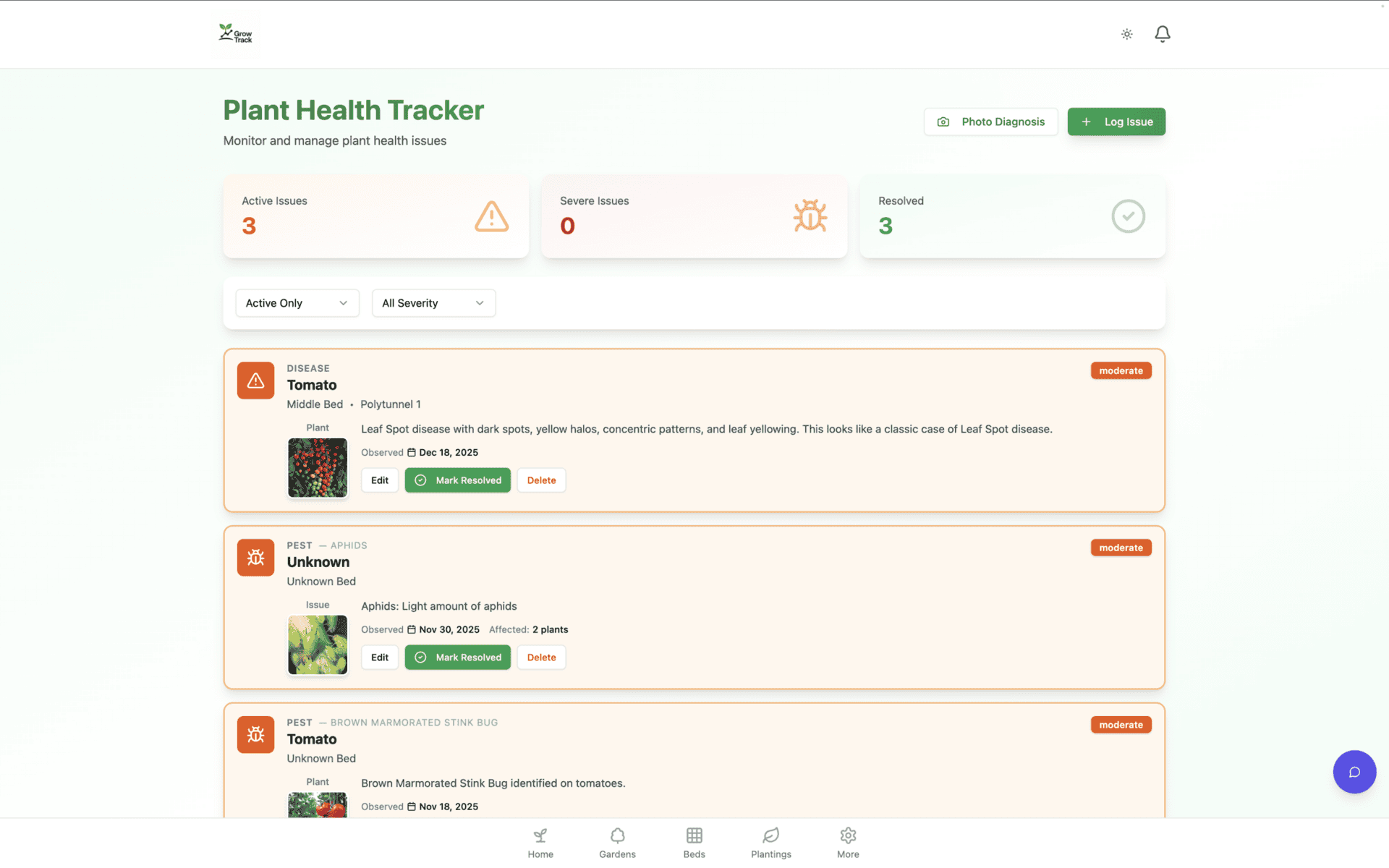
It is also one of the key reasons I built GrowTrack as a garden intelligence system rather than another simple planner. If you go to https://usegrowtrack.com you will see it is built around real garden context, not generic date boxes. That difference matters because gardening success lives in condition, timing, history, and pattern, not in tidy averages alone.
The danger with calendars is subtle.
They do not usually fail in a loud way. They fail by giving false confidence.
A gardener sees the month, sees the job, and thinks the match is enough. The calendar says it is time, so the task must be right. Seeds go in because the date lines up. Seedlings go out because the month looks correct. Jobs happen according to the chart, even while the actual garden is moving to a different rhythm.
Then the result disappoints, and the gardener feels confused.
They followed the advice.
They were not careless.
They were not late.
So why did it still go wrong?
Because the calendar left out the most important part.
Readiness.
A garden is ready according to conditions, not according to the neatness of a printed chart.
That sounds obvious when said plainly, but many gardeners do not fully trust themselves to work that way. A calendar feels safer. It feels objective. It feels like someone else has thought for you.
The problem is that someone else cannot think for your exact bed in your exact season.
I have watched gardeners put seeds into cold ground because the date looked right, then wonder why germination dragged. I have seen seedlings planted out into beds that looked available on the plan but were still not ready in the way that mattered. I have seen people become strangely loyal to sowing windows that no longer matched the weather in front of them.
That is not stubbornness. It is what happens when a calendar gets mistaken for reality.
The right way to use a calendar is much lighter than most people think.
A calendar should orient you.
It should not override the garden.
It should say, this is roughly the season to start paying attention to this crop.
It should not say, ignore every other signal and do it now, because the page says so.
That distinction changes everything.
Once you stop treating timing advice as a command and start treating it as an invitation to observe, you become a much stronger gardener. You begin asking better questions.
Is the soil warm enough?
Is this bed ready?
What happened here last time?
How has this spring behaved so far?
What is the garden showing me, beyond the month on the page?
That is where calendars become useful again. Not as controllers. As prompts.
Experienced gardeners tend to drift this way naturally, even if they do not always explain it. They start looking at the garden more than the guide. They watch soil, growth, weather, and momentum. They notice timing through pattern rather than rigid instruction. That is not luck. It is pattern recognition built from memory.
And that is the part many gardeners are missing.
Without memory, a calendar feels stronger than it really is.
With memory, a calendar falls into its proper place.
That is why GrowTrack matters here as well. It helps timing sit inside the context. Bed history. Crop history. Seasonal behaviour. Previous outcomes. Once all of that is connected, your decisions become much more grounded. You are no longer gardening from averages. You are gardening in your garden.
That is a completely different thing.
If this rings true, read Why Garden Plans Rarely Survive Spring next, because it shows how fixed plans and fixed dates often break for the same reason. Then read What Garden Intelligence Actually Means, because that is really where this conversation leads. Once you stop relying on calendars alone, you need a better way to think.
And if you want to see the system I built to support that shift, go to https://usegrowtrack.com.
d twice.
This pressure point returns under these conditions.
That is intelligence.
It is not a pile of facts. It is connected understanding.
And that is why I think the idea matters so much now. Gardens are not getting simpler. People are trying to manage more complexity with less time. That means the old way of relying on memory, notebooks, and generic calendars starts breaking down faster. Not because people are less capable. Because the structure is no longer strong enough.
That is where GrowTrack comes in.
It gives you a place where gardens, beds, plantings, tasks, and history all sit inside the same system. That means observations do not drift away from the spaces they belong to. Timing stays attached to outcomes. Patterns become visible. The garden stops feeling like a collection of isolated jobs and starts feeling like something readable.
That is what garden intelligence actually means.
Not replacing the gardener.
Supporting the gardener with better continuity, better context, and better decisions.
If this connects with how you already think, read Why Your Garden Needs Memory next, because memory is the foundation under all of this. Then read Why Most Garden Journals Fail Over Time, because many gardeners have been trying to build intelligence with tools that were never designed to hold it properly.
And if you want to see the system I built around this idea, go to https://usegrowtrack.com.


