

Tony O’Neill, expert gardener and best-selling author of the famous “Simplify Vegetable Gardening,” “Composting Masterclass,” and “Your First Vegetable Garden,” combines lifelong passion and expert knowledge to simplify gardening. His mission? Helping you cultivate a thriving garden. More on Tony O’Neill
Most garden journals do not fail in January.
They fail in late April.
That is the point where the season starts asking more from you than your good intentions can comfortably carry.
In January, a garden journal feels like one of the smartest things you could start. You buy the notebook, open the app, or set up the spreadsheet. You imagine a season where everything is tracked. Sowing dates. Varieties. Harvests. Problems. Weather notes—the lot.
And for a little while, it works.
You log the first sowings.
You note what has germinated.
You make a few observations.
Then the season starts moving.
Seedlings need pricking out. Beds need clearing. The weather shifts. One crop needs attention now. Another needs feeding. You mean to update the journal later, but then a week passes, and once that happens, the system starts slipping away from you.
That is the point most gardeners know very well. The journal is still there. It has not vanished. But it has stopped being live.
That matters because a journal only helps while it stays close to the garden.
If it falls behind, it becomes something else. It becomes a reconstruction exercise. And gardeners are rarely short of jobs already.
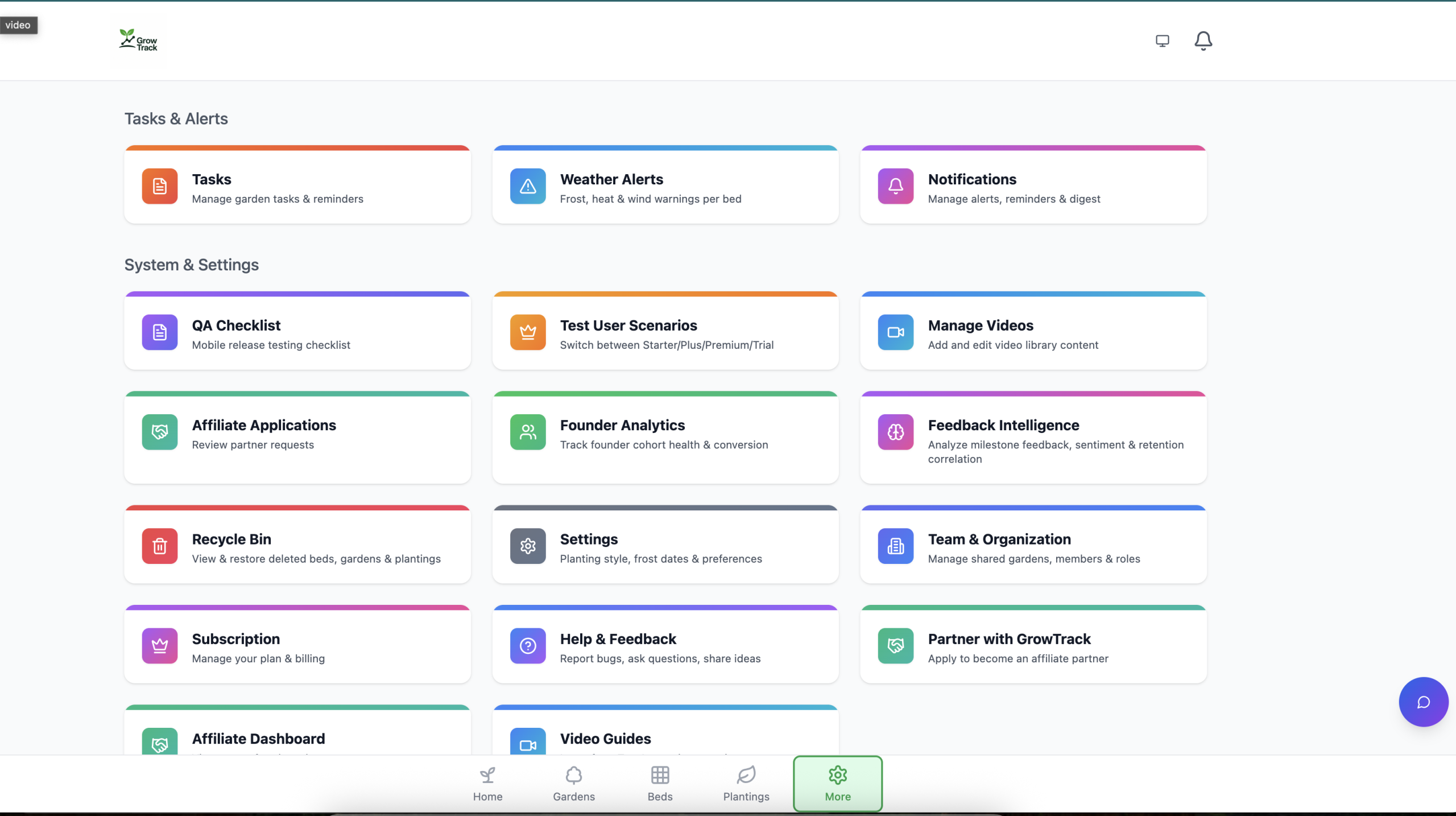
This is one of the reasons GrowTrack matters. If you look at https://usegrowtrack.com you will see it was built to keep the act of tracking connected to the real structure of the garden, not floating off to one side like an admin task you feel bad about not keeping up with.
The main problem with traditional garden journaling is not the idea. The idea is sound. The problem is friction.
A journal asks you to do a second job after the first one.
You sow the seeds, then record it.
You transplant the crop, then record it.
You notice the issue, then record it.
You harvest the produce, then record it.
That sounds simple until the season gets busy. Then every extra step starts competing with the work itself.
And once a journal slips, another problem appears.
Most journals are hard to use in reverse.
That is an issue people do not talk about enough. They assume the value of a journal lies in capturing information. The truth is, the value lies in retrieving it when needed.
A journal is only truly useful if it helps answer questions.
What happened in this bed last year?
Which variety did best in this space?
When did flea beetle pressure show up?
How long did these seedlings take to move on last season?
Which part of the garden always lags behind in spring?
If you cannot answer those questions easily, your journal becomes storage, not support.
That is where the habit starts feeling less worthwhile.
I have seen plenty of gardeners with notebooks full of good information who still garden mostly from memory because the journal is not structured in a way that helps in the moment. They have pages of effort and very little practical retrieval. That is frustrating, because they did the work. The system simply did not hold together well enough to pay them back.
Then memory steps in, and memory is useful, but only up to a point.
You remember the dramatic bits. You remember the great harvest. The blight year. The slug year. The tray that never got going. But memory is selective. It keeps the broad story and sheds the small signals, and those small signals are often the part that would help you most next time.
That is why so many gardeners have experience but still feel like the garden keeps slipping through their fingers. The experience is there. The continuity is weak.
This is where a lot of paper journals, basic note apps, and disconnected spreadsheets run out of road. They can store information. They cannot always turn it into a working memory for the garden.
That is the part GrowTrack is built around.
Instead of treating a journal as a separate diary of what happened, it ties records to the actual structure of the garden. Beds. Plantings. Timing. Tasks. History. So the information stays attached to the place where it matters. That is a very different way of thinking, and it makes all the difference because gardeners do not think in pages. They think in spaces, crops, and what happened there.
The strongest systems reduce mental load. Weak systems increase it.
A weak journal says, remember to write this down.
A stronger system says, here is the context you need when you need it.
That is why so many journals start with enthusiasm and end with silence. They asked for discipline, but they did not return enough value in the middle of the season.
A gardener will keep using a system that helps them think better.
They will quietly abandon one that only collects effort.
And that is the heart of it.
The issue is not whether journaling is a good idea. It is. The issue is whether the structure is good enough to survive real gardening.
Most are not.
If this sounds familiar, read Why Your Garden Needs Memory next. It takes this idea further and explains why continuity matters more than most gardeners realise. Then read The Problem With Gardening Calendars, because timing advice without usable history often creates the same kind of failure for the same reason.
If you want to see the garden system built specifically to solve this problem, go to https://usegrowtrack.com.


